


🚨 2026 Security Alert: LinkedIn Account Restriction Protocol
LinkedIn's 2026 security engine enforces automated behavioral tracking, biometric identity verification via Persona, and strict rate limits on profile viewing and connection requests. If your account was locked due to "unusual activity," acting hastily can turn a temporary 24-hour restriction into a permanent ban. Follow this verified recovery blueprint to safely restore your access.
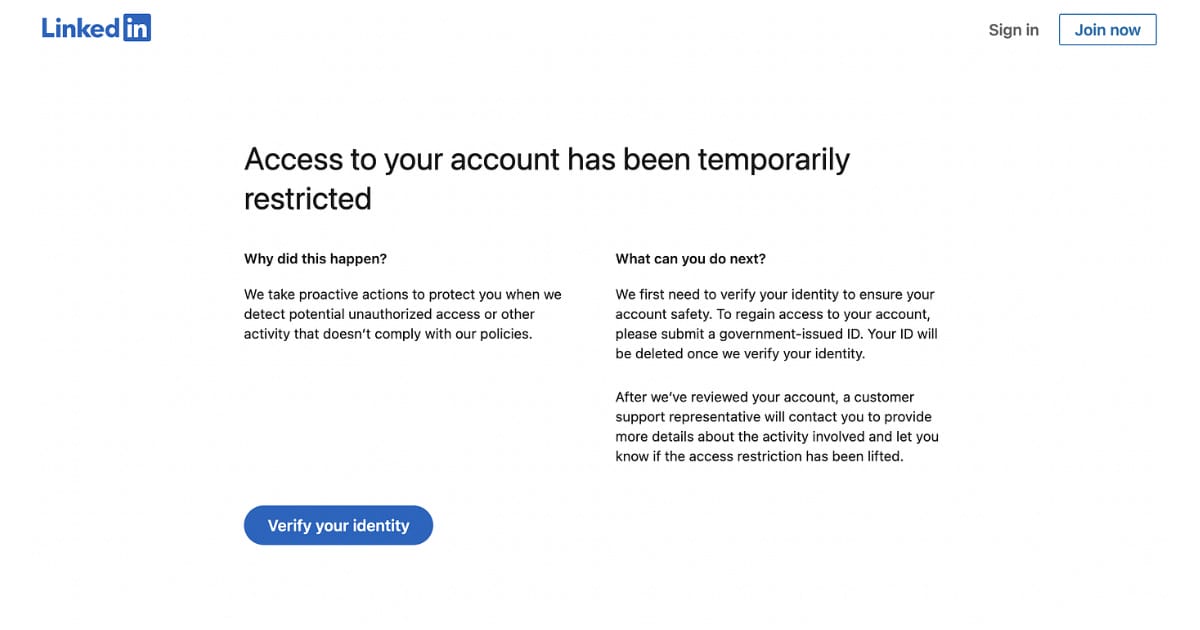
Few professional setbacks are as disorienting as logging into LinkedIn to check client messages, close a deal, or scout new talent, only to be stopped by a stark screen declaring: "Access to your account has been temporarily restricted" or "Important notice: We noticed activity that indicates you might be using an automation tool."
For founders, sales leaders, and consultants, a locked LinkedIn profile brings business development to an abrupt halt. However, over 85% of first-time LinkedIn account locks are completely reversible if you follow the correct sequence of recovery steps and avoid the common traps that trigger permanent termination.
Quick Answer: How to Unlock Your Restricted LinkedIn Account
To unlock a restricted LinkedIn account, first immediately disconnect all third-party browser extensions, cloud scrapers, and automation software. Next, click "Verify your identity" on the restriction screen and complete the government ID submission via LinkedIn's verification partner (Persona). If you are not prompted for ID or your verification stalls, submit a formal appeal ticket through the LinkedIn Help Center support form. Most temporary restrictions resolve within 24 to 72 hours once identity verification is approved.
The 4 Levels of LinkedIn Account Restrictions in 2026
LinkedIn does not apply a one-size-fits-all lock. Understanding which tier of restriction your account has received determines the exact recovery strategy you must deploy:
| Restriction Level | Symptoms & Warning Screen | Typical Duration | Recovery Path |
|---|---|---|---|
| 1. Security Checkpoint / CAPTCHA | SMS code or email OTP prompt; quick visual puzzle (Arkose Labs). | Immediate (2-5 mins) | Solve puzzle, confirm 2FA code, and log in. |
| 2. Automation Warning / Soft Lock | "Notice: We noticed activity that indicates you might be using an automation tool." Must click "Agree to comply". | Immediate after agreement | Disable all scrapers immediately and click "Agree to comply". |
| 3. Temporary Account Suspension | "We've restricted your account temporarily" with a specific unlock timestamp or mandatory ID verification button. | 24 hours to 7 days | Complete Persona ID verification; wait out cooldown. |
| 4. Permanent Account Restriction | "Your account has been permanently restricted due to multiple violations." | Indefinite / Permanent | Formal appeal with LinkedIn Trust & Safety / Executive Escalation. |
Why Is My LinkedIn Account Locked Due to Unusual Activity?
LinkedIn's automated defense systems monitor millions of interactions every second. When an account exceeds human operational velocity or exhibits non-standard session footprints, an automated lock triggers automatically. Here are the primary culprits in 2026:
1. Multiple Failed Login Attempts and Credential Stuffing
If you or someone else attempts to log into your account with incorrect passwords repeatedly, LinkedIn locks access to safeguard your personal messages and data against brute-force attacks. This also happens when old devices or forgotten API integrations continue attempting logins with expired session tokens.
2. Misuse and Abuse of High-Velocity Automation Tools
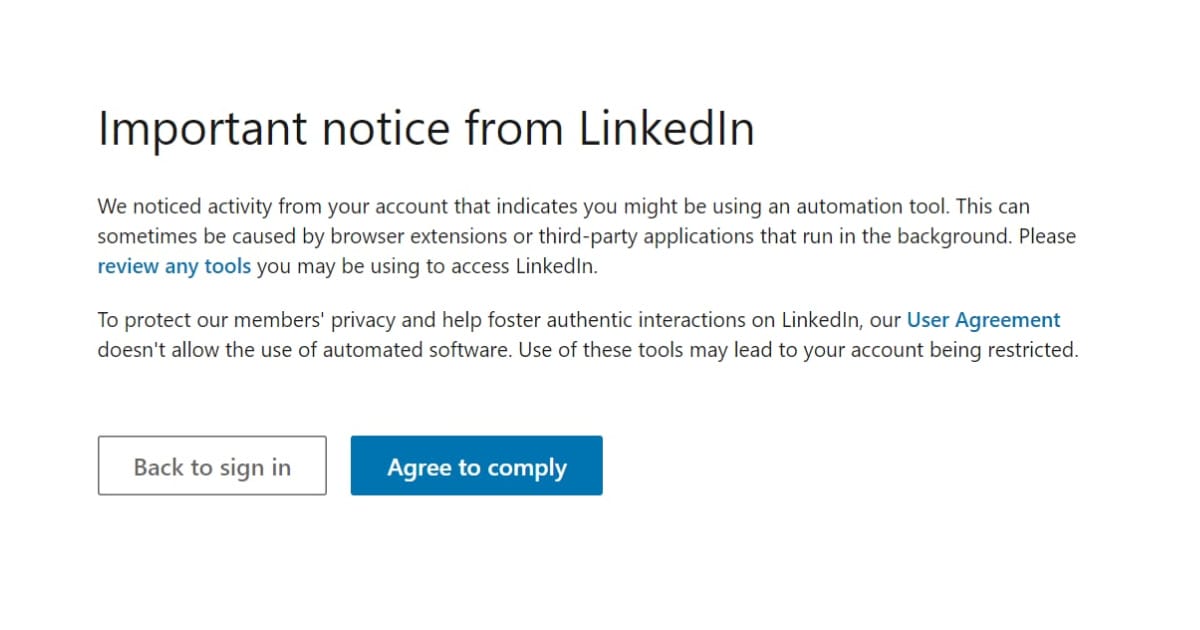
It is no secret that LinkedIn enforces aggressive countermeasures against illicit automation tools. Accounts exhibiting inhuman behavioral patterns—such as visiting 400 profiles an hour, sending 50 connection requests in seconds, or auto-scraping contact directories—are immediately flagged by anti-bot algorithms.
In 2026, LinkedIn's security does not just count clicks; it monitors mouse movement trajectories, DOM interaction delays, and session cookie hijacking. Cloud-based tools routing traffic through data center IP addresses (AWS, DigitalOcean, Hetzner) are trivial for LinkedIn to identify and ban.
3. Rapid Inconsistent Location and IP Hopping
If your LinkedIn session originates from London at 9:00 AM and suddenly sends a message from Singapore at 9:45 AM, LinkedIn's anomaly detection registers impossible travel velocity. This commonly occurs when users run commercial VPNs that rotate IP addresses across global servers while browsing, or when delegating profile management to remote virtual assistants without dedicated local residential proxies.
4. Content and Community Policy Violations
LinkedIn may restrict an account due to violations of its Professional Community Policies. Common triggers include publishing spammy outbound commercial links, harassment in direct messages, posting misleading or deceptive claims, or copyright infringement.
5. Being Reported by Other Members
When prospective leads repeatedly click "I don't know this person" upon receiving your connection requests, or report your cold DMs as spam, your account's trust score plummets. Accumulating multiple spam reports within a 48-hour window is one of the quickest routes to an automated account restriction.

Step-by-Step Action Plan: How to Recover Your Locked Account
If you encounter a locked or restricted screen, stay calm and follow this systematic recovery sequence:
Step 1: Sever All Third-Party Tool Access Immediately
Before submitting any appeal or clicking verify, revoke permissions for all external tools. If an automated script continues making background API calls while LinkedIn support reviews your account, your appeal will be denied immediately.
- Open your browser settings and disable all LinkedIn-related extensions.
- Log into any external cloud automation or lead scraping platforms and pause all active campaigns.
- Clear your browser cache, cookies, and active session tokens.
Step 2: Complete Identity Verification via Persona
LinkedIn partners with identity platform Persona to authenticate genuine account holders. If prompted to verify your identity:
- Click the blue "Verify your identity" button.
- Use your smartphone camera when prompted (mobile scans yield significantly higher optical recognition pass rates than desktop webcams).
- Submit a valid government-issued photo ID (Passport, Driver's License, or National ID Card). Ensure all four corners are visible with zero glare.
- Complete the biometric facial selfie scan as directed.
Important: The name on your government ID must closely match the first and last name displayed on your LinkedIn profile. If you use a pseudonym or nickname, your automated verification will fail, requiring a manual support review.
Step 3: Submit a Formal LinkedIn Appeal Ticket
If you did not receive a verification prompt, or if your identity verification has been pending for over 48 hours without resolution, submit an appeal directly to LinkedIn's Trust and Safety division:
- Navigate to the official LinkedIn Help Center Recovery Form (accessible without logging in).
- Enter the primary email address registered to your account.
- State your situation calmly, professionally, and factually. Avoid accusatory or emotional language.
- Confirm that you have reviewed LinkedIn's Professional Community Policies, uninstalled all unauthorized extensions, and are prepared to adhere strictly to member guidelines.
Step 4: Reach Out via LinkedIn Help on X (Twitter)
When email tickets stall in large backlogs, public social channels provide an effective escalation path. Send a direct message or respectful public post to @LinkedInHelp on X (formerly Twitter). Provide your support ticket reference number and state that your account has been locked. The social response team often escalates stuck verification queues directly to tier-2 human reviewers.
How to Safely Warm Up Your Account After Being Unlocked
Once your account is restored, do not immediately resume heavy outreach. Following an unlock, your account remains under elevated algorithmic probation for 14 to 30 days. One sudden spike in activity will trigger an instant, permanent ban.
Follow this safe re-entry protocol:
- Days 1–3: Pure observation. Log in manually once per day. Read your feed, browse industry news, and respond to existing direct messages. Do not send any connection invitations.
- Days 4–7: Light authentic engagement. Leave 3 to 5 thoughtful comments on prospect or peer posts. You can safely draft and review your posts using Engage AI's free LinkedIn Post Preview & Formatter to ensure clean formatting without relying on risky third-party browser injections.
- Days 8–14: Gradual connection ramp-up. Limit new connection requests to a maximum of 5 to 10 per day, exclusively with personalized, high-context notes to minimize rejection rates.
Sustainable Growth: Authentic Peer Engagement vs. Unsafe Automation
The hard truth about LinkedIn in 2026 is that brute-force automation tools, generic scraping scripts, and spammy DM sequences are obsolete. LinkedIn's detection algorithms grow smarter every month, and the reputational cost of having your account frozen in front of your clients is catastrophic.
Instead of risking your livelihood on bot farms that trigger account suspensions, successful business leaders leverage authentic engagement communities. By participating in the Engage AI engagement community, your posts and commentary receive genuine, early velocity from verified professionals and enterprise leaders.
This natural interaction signals high organic relevance directly to LinkedIn's recommendation engine—expanding your reach, driving profile views, and generating inbound opportunities safely without ever violating community guidelines.
Frequently Asked Questions (FAQs)
How long does a temporary LinkedIn account restriction last?
A first-time temporary restriction typically lasts between 24 hours and 7 days. If identity verification is required, access is usually restored within 24 to 48 hours after submitting your government-issued ID via Persona.
Will using AI tools on LinkedIn get my account banned?
Not all AI tools violate LinkedIn's terms. Tools that assist you with drafting content or generating conversational comment suggestions while leaving you in manual control are generally safe. However, tools that automate browser actions, scrape data, or send hundreds of unattended connection requests violate LinkedIn's User Agreement and will trigger account restrictions.
What documents does LinkedIn accept for identity verification?
LinkedIn accepts valid government-issued photo identification, including a passport, driver's license, state ID, or national identity card. The document must be unexpired, clearly legible, and the full name must match the name on your LinkedIn profile.
Can a permanently restricted LinkedIn account be recovered?
While difficult, permanent restrictions can sometimes be reversed if the ban was triggered by a false positive from automated bot filters. You must submit a formal appeal through LinkedIn's Help Center, clearly explain why the restriction was in error, verify your identity, and provide evidence that no unauthorized automation software was intentionally used.
Conclusion
Receiving an account lock warning on LinkedIn can be alarming, but it is rarely the end of your professional presence. By identifying the root cause, disconnecting risky automated software, verifying your identity with Persona, and conducting a measured account warm-up, you can regain control of your network. Moving forward, protect your profile by substituting dangerous scrapers with authentic peer interactions through the Engage AI engagement community and utilizing safe tools like the post preview formatter to build sustainable influence on LinkedIn.